

Nearly 90 percent of american digital consumers rely on AI-driven search engines to form opinions about brands. With AI now analyzing and summarizing brand information across countless online spaces, your reputation can change almost overnight. Understanding how artificial intelligence shapes digital brand visibility means the difference between being a trusted leader or getting lost in the noise. This guide reveals new strategies for navigating brand perception in an era where algorithms decide what people see first.
Defining AI Overviews and Brand Monitoring
AI Overviews represent a transformative approach to digital brand visibility, where artificial intelligence platforms synthesize comprehensive summaries and insights about brands across multiple digital channels. According to Clausiuspress, these AI systems leverage advanced algorithms to analyze brand perception through complex mechanisms like anthropomorphism, emotional interaction, and trust building.
Unlike traditional search engine optimization, generative engine optimization (GEO) focuses specifically on adapting digital content to improve visibility within AI-generated results. As Wikipedia explains, this emerging practice addresses the unique challenges of optimization for large language model platforms that synthesize responsive information dynamically.
Brand monitoring in the AI era requires a multifaceted approach that goes beyond conventional tracking methods. Key aspects of effective AI brand monitoring include:
- Tracking brand mentions across generative AI platforms
- Analyzing sentiment and contextual representation
- Understanding geographic and language-specific brand perceptions
- Identifying potential reputation risks or misrepresentations
By proactively monitoring how AI platforms interpret and present brand information, organizations can develop strategic insights that inform content creation, reputation management, and digital communication strategies.
How AI Platforms Shape Brand Perception
AI platforms have fundamentally transformed how brands are perceived and represented in digital ecosystems, utilizing sophisticated neural network technologies to analyze and interpret brand identities. According to IJRASET, advanced AI approaches like Convolutional Neural Networks (CNNs) and Recurrent Neural Networks (RNNs) can now systematically classify and evaluate visual and textual brand representations with unprecedented precision.
Brand perception in the AI era goes far beyond traditional marketing metrics. Journals research reveals that consumer trust is deeply influenced by AI-generated content, with factors like perceived authenticity, informativeness, and personalization playing critical roles in shaping brand evaluations. This means brands must carefully calibrate their AI-driven communication to balance technological efficiency with human-like engagement.
The key mechanisms through which AI platforms shape brand perception include:
- Real-time sentiment analysis across digital platforms
- Contextual interpretation of brand mentions
- Predictive modeling of audience perceptions
- Multi-dimensional reputation tracking
- Cross-platform brand consistency evaluation
By understanding these intricate AI-driven processes, organizations can develop more nuanced strategies for managing their digital brand representation, ensuring that AI platforms accurately and favorably reflect their core identity and values.
For a comprehensive exploration of how AI influences brand visibility, check out our guide on AI brand perception.
City-Level and Multilingual AI Insights
AI insights are increasingly becoming granular and location-specific, transforming how brands understand their digital representation across diverse geographical contexts. According to ArXiv, research investigating generative AI’s impact on cross-border e-commerce demonstrates the nuanced ways technological platforms can influence brand construction at city-level interactions, revealing complex relationships between AI productivity and brand perception.
Multilingual AI monitoring represents a critical strategy for global brands seeking comprehensive digital visibility. Different linguistic contexts can dramatically alter how AI platforms interpret and present brand narratives, making city-specific and language-aware insights essential for precise brand management. These insights go beyond simple translation, encompassing cultural nuances, regional communication styles, and localized digital engagement patterns.
Key dimensions of city-level and multilingual AI insights include:
- Hyperlocal brand perception analysis
- Language-specific sentiment tracking
- Regional digital behavior mapping
- Cultural context interpretation
- Geographically targeted brand positioning evaluation
By leveraging advanced AI technologies that can parse complex linguistic and geographical data, organizations can develop sophisticated strategies that respond to the unique characteristics of each market.
 Multi-language AI monitoring enables brands to understand and adapt to the intricate ways different communities interact with and perceive digital brand representations.
Analyzing Content Gaps and Competitors
Competitive content analysis in AI platforms requires a sophisticated approach that goes beyond traditional benchmarking strategies. According to ArXiv, research reveals that digital visibility is not merely about publication volume, but about the strategic propagation of ideas and innovative content across AI-driven networks, particularly examining how different organizations influence digital discourse.
Competitor content gap analysis represents a critical methodology for understanding strategic positioning in AI-generated landscapes. The emerging AI ecosystem demands a nuanced approach that considers not just content volume, but the depth, relevance, and perceived trustworthiness of digital representations. ArXiv research emphasizes that user trust in AI-enabled systems is fundamentally influenced by technical features, design considerations, and the socio-ethical dimensions of content presentation.
Key strategic elements in analyzing content gaps and competitors include:
- Identifying unexplored content territories
- Mapping competitive content positioning
- Evaluating content depth and comprehensiveness
- Assessing narrative complexity and nuance
- Tracking emerging topic trends
By systematically dissecting competitors’ content strategies, organizations can develop targeted approaches that not only fill existing gaps but anticipate future information needs.
AI Visibility Technical Audit provides advanced methodologies for brands seeking to understand and optimize their digital content strategies in an increasingly complex AI-driven landscape.
Risks of Ignoring AI-Driven Discovery
Brands that fail to actively monitor and engage with AI-driven discovery platforms risk significant reputational and strategic disadvantages in an increasingly algorithmic digital landscape. JM Horizons research reveals that AI-driven content creation profoundly impacts audience perception, with generational and demographic variations significantly influencing how digital representations are interpreted and valued.
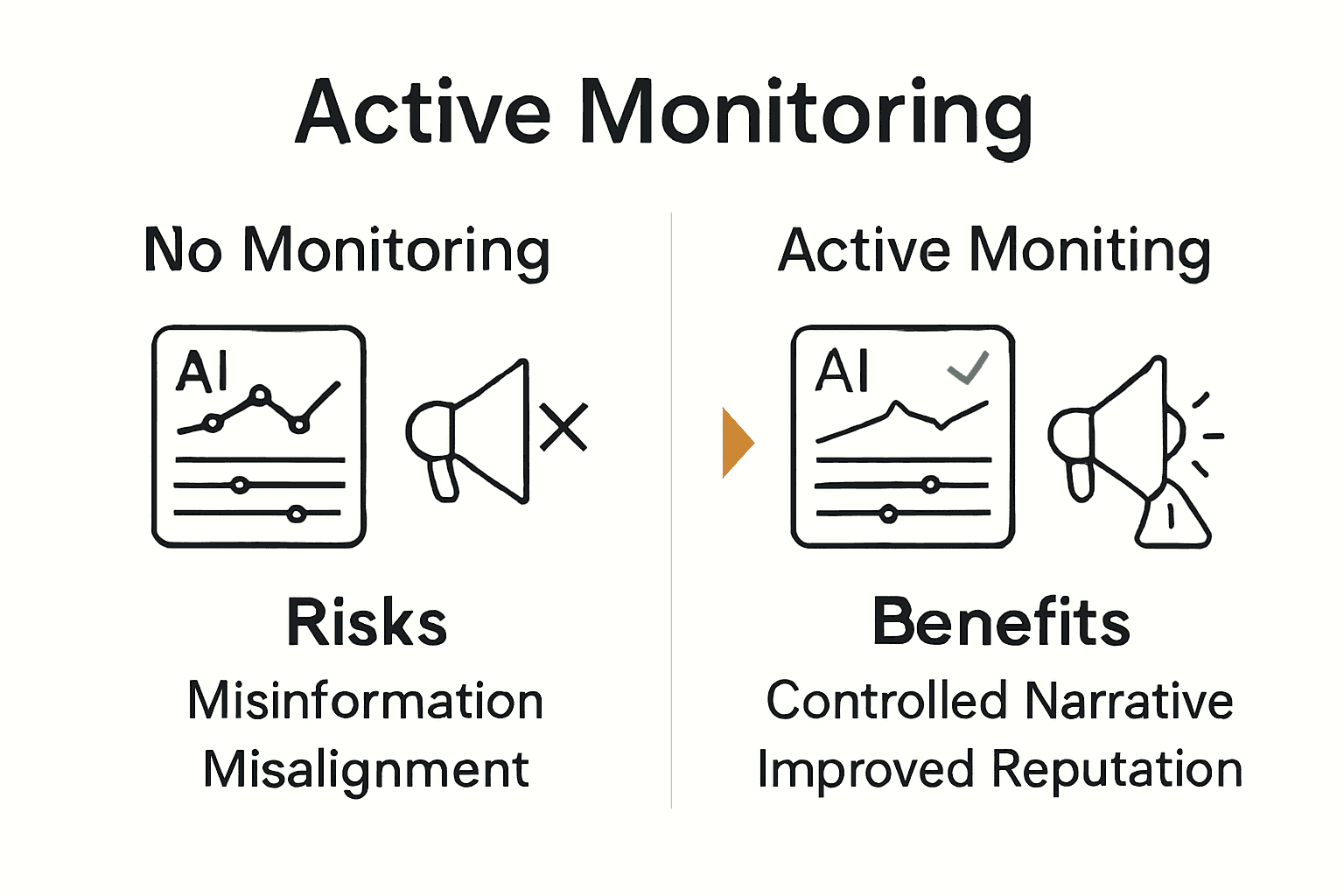
Passive brand positioning in AI ecosystems can lead to several critical risks that extend far beyond traditional marketing challenges. When organizations remain disengaged, they surrender control of their narrative to algorithmic interpretations, potentially allowing inaccurate, outdated, or misaligned brand representations to dominate digital discovery channels. This passive approach essentially allows AI platforms to construct and disseminate brand identities without strategic oversight or intentional guidance.
Potential consequences of ignoring AI-driven discovery include:
- Uncontrolled brand narrative development
- Misalignment with target audience perceptions
- Reduced digital discoverability
- Diminished competitive positioning
- Increased vulnerability to misinformation
By proactively understanding and strategically managing AI-generated brand representations, organizations can transform potential risks into opportunities for precise, dynamic digital communication.
 AI-Driven Search Guide provides comprehensive strategies for brands seeking to maintain visibility and control in an increasingly algorithmic discovery environment.
Optimizing Brand Strategy Through AI Intelligence
AI intelligence has transformed strategic brand development from a reactive to a predictive discipline, enabling organizations to craft nuanced, data-driven communication strategies. ACR Journal research reveals that modern consumers increasingly evaluate brands through complex lenses of sustainability, digitalization, and holistic customer experience, demanding sophisticated AI-powered insights.
Strategic AI brand optimization requires a multidimensional approach that transcends traditional marketing boundaries. Srusti Management Review studies demonstrate that AI-generative advertising profoundly influences brand attitudes by leveraging dimensions such as hedonism, consumer connectivity, and creative storytelling, fundamentally reshaping how organizations communicate their core value propositions.
Key strategic elements for AI-driven brand intelligence include:
- Dynamic sentiment tracking across platforms
- Predictive audience perception modeling
- Personalized content recommendation strategies
- Cross-channel narrative consistency
- Real-time competitive intelligence
By integrating advanced AI technologies, brands can transition from passive communication to proactive, intelligent engagement that anticipates and shapes audience perceptions. How to Optimize Brand for AI offers comprehensive strategies for organizations seeking to maximize their digital visibility and strategic relevance in an increasingly algorithmic marketplace.
Take Control of Your Brand’s AI Visibility Today
The article highlights the growing challenge brands face in managing how AI platforms perceive and represent their identity across diverse languages and locations. Without active monitoring, the risk of losing control over your brand narrative and falling behind competitors increases. Key pain points such as tracking brand mentions on generative AI, analyzing sentiment, closing content gaps, and understanding city-level insights demand a sophisticated solution that goes beyond traditional methods.
Our platform at FAII.ai is built exactly for this need. Experience real-time AI-driven digital visibility and market intelligence that empowers your brand to stay ahead in an AI-dominated landscape. With our solution, you can:
- Monitor your AI presence on platforms like Google AI Overviews, ChatGPT, and more
- Gain localized, multilingual brand insights that uncover hidden opportunities
- Identify competitor content gaps and strategically optimize your messaging
Unlock the full potential of your AI brand strategy. Visit our comprehensive AI Visibility Guide to learn how to transform AI-driven challenges into strategic advantages. Take the next step now and let FAII.ai help you master your brand’s AI-driven discovery before your competitors do.
Frequently Asked Questions
What are AI Overviews and why are they important for brand monitoring?
AI Overviews are summaries generated by AI platforms that synthesize insights about brands across digital channels. They are important for brand monitoring as they help organizations understand how their brand is perceived and represented in the digital space, allowing for better reputation management and strategic communication.
How does generative engine optimization (GEO) differ from traditional SEO?
Generative engine optimization (GEO) focuses on optimizing digital content for AI-generated results, unlike traditional SEO, which primarily aims to improve visibility within conventional search engine results. GEO addresses the unique challenges posed by large language models and AI platforms.
What key elements should be included in a brand monitoring strategy for AI platforms?
An effective AI brand monitoring strategy should include tracking brand mentions, analyzing sentiment and context, understanding geographical perceptions, and identifying potential reputation risks or misrepresentations.
What risks do brands face if they ignore AI-driven discovery platforms?
Brands that ignore AI-driven discovery may face uncontrolled brand narratives, misalignment with audience perceptions, reduced visibility, diminished competitive positioning, and increased vulnerability to misinformation.